TW 2.0
- 0.0
- Rating
- 10.00K
- Installs
- Free
- Price

 Analysis by App-foxy
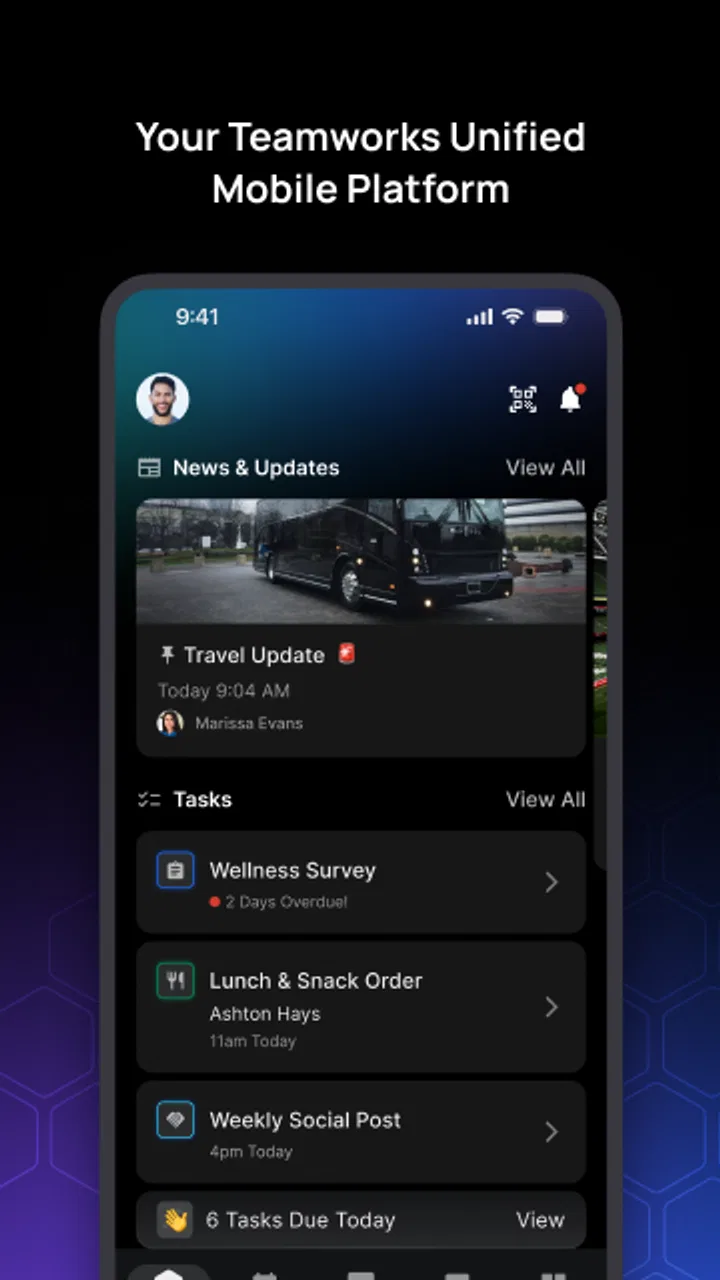
I approached TW 2.0 as a practical sports app rather than something to browse casually for a few seconds. Its “Elite Sports Tech” positioning suggests a tool aimed at organized athletic environments, and that distinction matters: a platform built around teams, staff, or serious training routines has different priorities from a general fitness tracker. My impression is that its value depends less on entertainment and more on whether it fits the way you already manage sports information and daily preparation.
The app is free, belongs to the Sports category, and is developed by Teamworks Innovations. It is intended for Teen users and requires Android 12 or later. The current release is version 1.11.17, while its Android presence has passed the ten-thousand-install mark. Those details make it approachable for people who want to try it without a purchase decision, but the operating-system requirement is important before you spend time setting it up.
How TW 2.0 Feels in Real Sports Use
I’d judge TW 2.0 by how well it fits into an actual sports routine, not by how many times I can open it in a quiet moment. For me, the useful question is whether it makes a team-related task easier to resume when the day gets busy. That practical test also shapes how I think about trust: I look for clear choices and sensible habits before relying on any app with a role in a shared routine.
You May Also Like

 AccuWeather: Weather Radar
AccuWeather Review: A Quick, Clear Forecast for Everyday Decisions
For everyday plans, the best forecast is the one you can understand quickly. AccuWeather makes rain timing, radar, and local conditions easy to act on, with a few trade-offs.

 Hill Climb Racing
Why Hill Climb Racing Still Turns Crashes Into One More Run
A tiny car, a bumpy hill and one more upgrade: Hill Climb Racing keeps resurfacing because its simple chaos makes every near-miss feel personal.

 AliExpress - Shopping App
AliExpress Makes Global Shopping Feel Personal, but Shoppers Bear the Risk
AliExpress turns a global marketplace into a pocket-sized discovery engine. Its reach is useful, its shopping loop compelling, and its trade-offs easy to miss.

 Lords Mobile: Kingdom Wars
Lords Mobile Is a Kingdom-Building Routine, Not a Quick Match
A case-by-case verdict on the building, battles, device demands, and social commitments that make Lords Mobile rewarding for some players and exhausting for others.

 PDF Scanner app - TapScanner
TapScanner Makes Paperwork Easier to Capture, Check, and Share
TapScanner makes scanning with a phone feel less like a rescue operation and more like a dependable step in getting work done. Its capture tools are useful, though not flawless.

 Block Blast!
 Shows How Much a Puzzle Game Can Leave Out
A quiet grid game shows why puzzle players increasingly value instant clarity, repeatable skill and low-pressure play—and where the genre still needs to catch up.
More From Our News Desk
View All News


Speed expectations before you commit to it
My first expectation with a sports technology app is not flashy animation; it is a short path from opening the app to finding the information I need. TW 2.0 makes the most sense when used as part of an existing athletic routine, where speed means avoiding unnecessary searching before practice, during a busy team day, or while checking something between commitments. That is a more useful standard than judging it like a social app.
Because the application is designed around the “TW 2.0” experience, I would treat it as a focused platform rather than a broad collection of unrelated sports content. That focus can be an advantage. A narrowly defined workflow is easier to learn than an app that tries to be a news feed, workout planner, scoreboard, and community all at once. The trade-off is that people looking for casual exercise inspiration may find less reason to return.
In everyday use, I would begin by deciding what I actually need from it. If I am an athlete, the priority is quick access to the parts of the platform connected with my team or training environment. If I am supporting a player, I would want to know whether the app reduces back-and-forth communication and repeated checking elsewhere. If I am simply looking for personal workouts, I would compare it with a dedicated fitness app before assuming that an elite-sports-oriented product is the best match.
The most important speed tip is to judge the app by the time it saves in a complete routine, not just by how quickly its opening screen appears. A sports app can feel fast while still creating extra work if the user must repeatedly switch between messages, calendars, notes, and other tools. TW 2.0 is most promising when it brings the relevant part of an organized sports experience into one place.
A realistic day with the app
Imagine a student athlete checking the phone before leaving for school. Instead of searching through old messages, the athlete opens TW 2.0 to review the information connected with the day’s sports responsibilities. Later, between classes, the same person checks again before heading to practice. Afterward, the app becomes a reference point rather than something to browse continuously.
That scenario shows where a specialized sports platform can be more useful than a general notes app. The benefit is not necessarily a single spectacular feature. It is the possibility of creating a consistent habit around team-related information. The weakness is equally clear: if the athlete’s organization does not actively use the platform, the app may not become central to the day at all.
I also see a useful role for coaches, staff members, and families who need a shared point of reference. However, the app should not be treated as a substitute for every existing communication channel until the whole group has adopted the same workflow. One person using it alone may gain little, while a coordinated group can gain much more from having a common place to check.
What happens during heavier use
The demanding moments are likely to come from context rather than from entertainment-style graphics. A busy sports day can involve frequent checks, changing schedules, multiple conversations, and pressure to find the right information quickly. In that situation, the app’s practical performance includes navigation clarity, recovery after interruptions, and how easily a user can return to the task after answering a call or switching to another application.
I would test TW 2.0 during a genuinely busy routine instead of forming an opinion from a quiet setup session. Open it before practice, leave it while doing something else, and return to the same task. Then repeat that process when the phone is receiving other notifications. This reveals more about real usability than simply scrolling through the initial screens.
There is also a human performance issue. A platform can be technically responsive and still feel slow when its structure is unfamiliar. New users may hesitate because they do not yet know where their most important information lives. My advice is to spend the first session learning the app’s main route rather than trying to inspect every available area. Once that route becomes familiar, repeated checks should feel less demanding.
For a team environment, heavy use may also mean several people relying on the same system at the same time. I would avoid making the app the only place for urgent information until I had used it long enough to understand how dependable it feels in my own group. For routine updates, centralization can be convenient. For time-critical changes, a backup communication method remains sensible.
Stability and the importance of recovery
Reliability in a sports app is not only about whether it opens successfully. I care about what happens after an interruption, whether the app returns me to a sensible place, and whether I can continue without repeating a long sequence of actions. These details matter because sports routines are often fragmented: a user may be walking into a facility, responding to a message, or moving between commitments.
My practical test would be simple. Start a task, switch away briefly, lock the phone, and return. Then repeat the process after moving through another part of the app. If the experience remains understandable, that is a strong sign for day-to-day use. If the user has to reconstruct what they were doing each time, the platform becomes less attractive even if its underlying purpose is valuable.
Recovery also includes the user’s own behavior. I would avoid relying on memory for important information just because the app is installed. Instead, I would build a short checking routine around the moments when information is most useful: before leaving, before practice, and after a scheduled activity. That approach reduces the chance of opening the app randomly and missing the reason I needed it.
Since TW 2.0 is a current application rather than an old legacy product, I would keep it updated through the normal app-store process and pay attention to how version 1.11.17 behaves on my device. An update number alone does not tell me how every phone will perform, so personal testing still matters. The Android 12 minimum also means compatibility should be checked before treating installation as automatic.
Device constraints you should consider
The clearest technical filter is the operating-system requirement. Android 12 or later is needed, so anyone using an older phone should check compatibility first. This is especially relevant for athletes who keep an older backup device or for families sharing access across several phones. A free app is not truly convenient if the hardware available at home cannot run it.
I would also consider the condition of the phone itself. A device with limited free storage, aggressive background restrictions, or an overloaded notification panel can make any connected sports platform feel less reliable. Those are not reasons to blame TW 2.0 automatically, but they are reasons to test it under the conditions in which you will actually use it.
Battery expectations should be practical. I would not install a sports app and assume it should replace a dedicated wearable or a specialized training instrument. Its usefulness is better judged by the organization and access it provides. If your main goal is detailed exercise measurement, compare it with an app designed specifically for tracking workouts or with the tools already built into your fitness device.
The Teen content rating is another useful signal for households. Parents and younger users should still decide whether the app fits their particular sports setting, but the rating places it in a more mature range than an app aimed at small children. For teams with mixed ages, that distinction may influence how families approach installation and supervision.
Where it beats familiar alternatives
The usual alternative to a specialized sports platform is a patchwork of group chats, email threads, calendar entries, paper notes, and general-purpose productivity apps. Those tools are flexible, and they may be enough for a small informal group. Their weakness is fragmentation. Important information can become buried among unrelated conversations, while different people may keep different versions of the same details.
TW 2.0 has a clearer reason to exist when a sports organization wants a more focused digital home. A general chat app is often better for spontaneous conversation, while a calendar is usually better for broad personal planning. A dedicated training tracker may be better for individual performance records. I would choose TW 2.0 when the sports workflow itself is the priority, not simply because it is free.
There is a trade-off in specialization. General tools are easier to repurpose when a group changes its habits. A focused sports app may be more coherent when everyone follows the same structure, but it can feel less useful if only one or two people participate. Before asking a whole team to change systems, I would test whether the app actually removes a repeated inconvenience instead of adding another place to check.
Three practical ways to get more from it
- Create a fixed checking habit: use the app at predictable points in the day instead of opening it constantly. This keeps it useful without turning it into another source of distraction.
- Test interruption recovery early: begin with a low-pressure task, switch to another app, lock the phone, and return. Learning how to resume is more valuable than memorizing every screen.
- Separate routine information from urgent communication: let TW 2.0 handle the organized sports workflow, but keep a backup channel available until your group trusts the system for time-sensitive changes.
A fourth insight is to evaluate it as a group tool, not only as a personal download. Ask whether teammates, coaches, or family members will use the same platform consistently. If the answer is no, the app may still be useful to you, but its biggest potential advantage will remain out of reach.
Who should install it, and who should skip it?
I would recommend trying TW 2.0 to athletes involved in a structured sports environment, especially when their current routine is spread across too many disconnected channels. It may also suit coaches, staff, or families who want a more consistent way to stay connected with an organized program. The fact that it is free makes experimentation easier, provided the phone meets the Android requirement.
I would be more cautious if you only want a simple solo workout timer, a running log, nutrition guidance, or a broad sports-news feed. Those needs usually call for tools built specifically around them. Installing a specialized team-oriented app for an individual fitness goal can create expectations it was not designed to meet.
I would also skip it for now if your device runs an older Android release, if your group has no intention of using the same platform, or if you strongly prefer keeping every activity inside a general-purpose calendar and messaging setup. Familiarity can be more valuable than specialization when your current system already works without confusion.
My performance verdict
TW 2.0 strikes me as a focused sports application whose success depends on context. I would not judge it by the standards of a game or a feature-heavy personal fitness tracker. Its strongest case is the organized athlete who needs a dependable, repeatable place for a sports-related routine and whose wider group can participate in that routine.
Its free price lowers the barrier to testing, while the Teen rating and Android 12 requirement define the practical audience more clearly. Teamworks Innovations has positioned it as “Elite Sports Tech,” but the useful question for me is whether it makes your actual sports day simpler. If it replaces scattered checking with one familiar workflow, it can earn a regular place on the phone.
My final advice is to run a realistic trial rather than making a decision from the store summary alone. Use it during a normal week, test it when you are busy, return to it after interruptions, and see whether other people in your sports circle adopt it. TW 2.0 is worth trying when coordination is the problem; it is not the right choice when you only need a basic solo fitness utility.
FAQs for TW 2.0
01What is TW 2.0 and what can users do with it?
TW 2.0 is an application designed to provide access to its core tools and content through a modern mobile interface. After installing it, users can explore the available sections, adjust supported preferences, and use the main functions from their Android or iOS device. The exact experience may vary depending on the version, device compatibility, region, and whether an account or internet connection is required.
02Is TW 2.0 free to download and use?
TW 2.0 may be available as a free download, but users should check the official Google Play Store or Apple App Store listing for the most accurate pricing information. Some features can require in-app purchases, a subscription, registration, or access to a specific service. Before confirming any payment, review the billing details, renewal terms, and cancellation options shown by the store.
03Does TW 2.0 require an account or an internet connection?
The requirements can depend on which parts of TW 2.0 you want to use. Basic sections may open without extensive setup, while personalized features, synchronization, saved data, or online content may require an account and a stable internet connection. It is also worth checking whether the app supports offline access, because some functions may stop working when mobile data or Wi-Fi is unavailable.
04Is TW 2.0 safe to install on an Android or iOS device?
For the safest installation, download TW 2.0 only from its official Google Play Store or Apple App Store page rather than from unofficial websites or modified files. Before installing, review the developer name, recent user feedback, update history, and requested permissions. Avoid granting access that seems unrelated to the app’s purpose, and keep your operating system updated for better security.
05What should I check before downloading TW 2.0?
Before downloading TW 2.0, confirm that your phone meets the listed operating-system and storage requirements and that the official listing is available in your country. Read the privacy policy to understand how information may be collected or shared, and check whether the app contains advertising, subscriptions, or purchases. Recent reviews can also reveal performance, login, compatibility, or support issues.
Pros
- Simple interface that is easy to understand for new users.
- Runs smoothly on most modern Android and iOS devices.
- Useful core tools are available without a complicated setup.
- Regular updates can improve stability and add useful refinements.
- Lightweight design helps conserve storage space and battery life.
Cons
- Some advanced features may require extra permissions or account access.
- The free version may include advertisements or usage limitations.
- Performance can vary on older devices with limited memory.
- Help resources may be limited if you encounter a technical issue.
- Certain functions may depend on a stable internet connection.

TW 2.0
Gallery